Watch these between September 7-11 if you trade ES, NQ or Gold futures
In this post
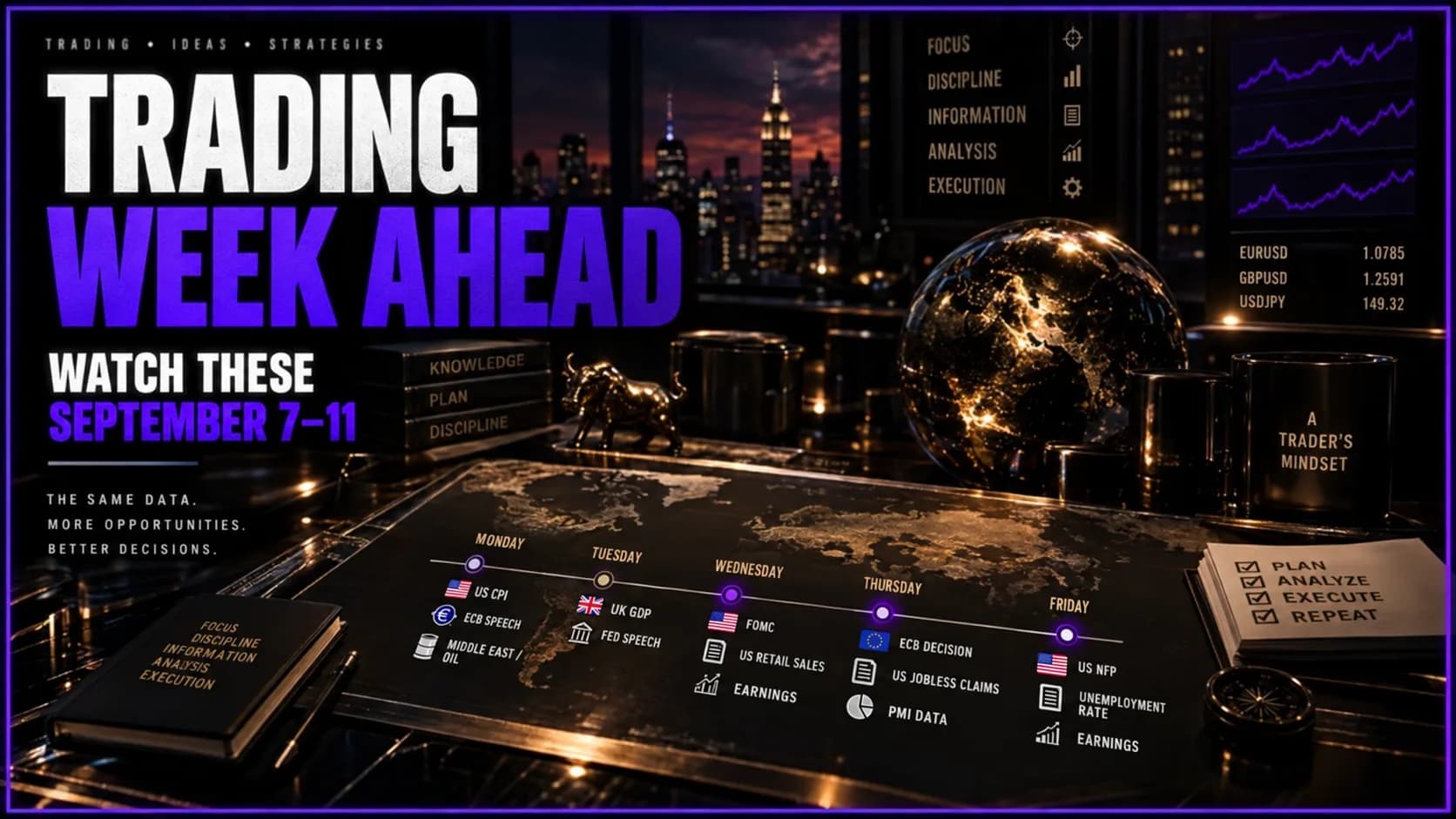
September 4, 2026.
Monday morning you open the economic calendar. Inflation data, bond yields, auctions, geopolitical news, Fed expectations. In a few minutes, you have more information in front of you than would be worth following at once during a trading week.
But more information doesn't necessarily mean better preparation. If you trade ES, NQ or Gold futures, the goal is not to read every piece of news. You need to recognize which events can change the market environment in which you make decisions.
Therefore, the main question for next week is not "what will happen?" But rather, which events are capable of repricing inflation and interest rate expectations, and thereby moving the S&P 500 (ES), Nasdaq-100 (NQ) and Gold (GC) futures markets.
In this Trading Week Ahead summary, we have filtered out the most important topics for the week of September 7-11, and we will also show you why they might be relevant as a trader.
Short summary
On Monday, due to Labor Day, different US market hours and potentially unusual liquidity should be expected.
Thursday brings the US August PPI, the week's first major inflation test.
Friday brings the August CPI, right before the September 15-16 FOMC meeting.
The movement of Treasury yields can be especially important for ES and NQ.
The Middle East remains a wildcard: conflict → oil → inflation expectations → yields → indices and gold.
The goal is not to predict the direction of the news, but to know in advance when and what you should watch.
The main story of the week: inflation → interest rate expectation → futures markets
The September 15-16 FOMC meeting is close. Because of this, any data that can change the market's picture of inflation or the Fed's next move can get more attention.
This is where many traders make their first mistake: they only watch the data itself. Yet for the futures market, how Treasury yields and the dollar react to it can be at least as important.
A simple mental model:
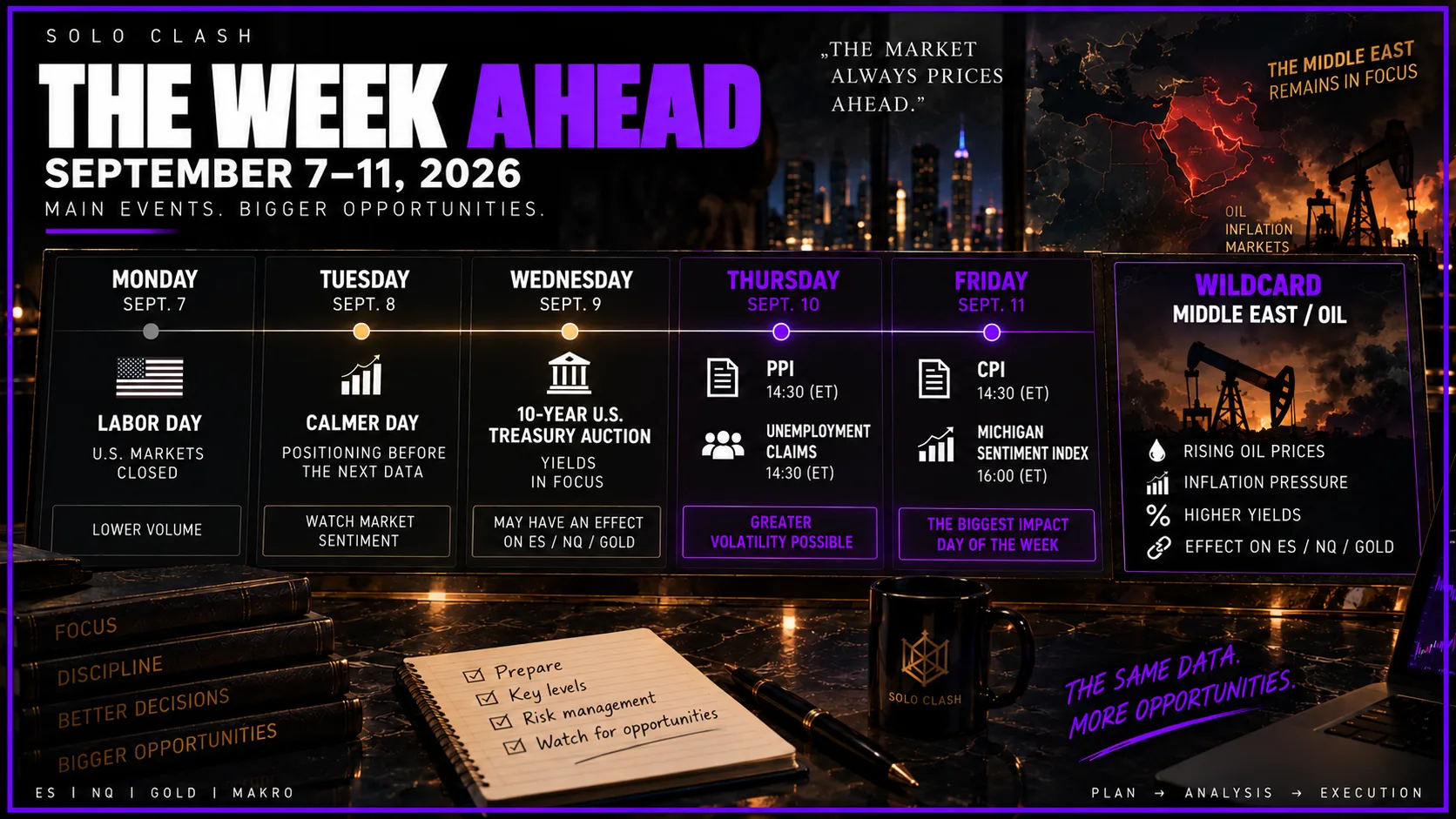
This is not a mechanical rule and not a trading signal. The market can react differently to the same data in a different market environment. That is precisely why you should always watch the reaction alongside the data.
1. Monday: Labor Day, even the start of the week is unusual
September 7 is Labor Day in the United States. According to the CME's official holiday advisory, no settlement prices will be determined or disseminated for CME, CBOT, NYMEX, and COMEX products on this day; the holiday trading schedule may vary by product.
Why does this matter as a futures trader? The holiday session is not the same environment as a normal US trading day. The usual participation and liquidity may differ, so you shouldn't automatically treat Monday like an average session.
What is worth checking?
The current CME holiday trading hours of the specific futures contract you trade.
Does your strategy make sense under lower or unusual liquidity.
Are you looking for a trade just because "it's Monday", while the environment does not support your setup.
The first task, therefore, is not prediction. But recognizing when the usual playing field changes.
2. Treasury yields: don't just look at the economic calendar
The 10-year US Treasury yield became one of the market's central themes again in early September. According to Reuters, higher yields can increase companies' funding costs, create competition for stocks, and put pressure especially on higher valuation, future cash flow-sensitive growth/tech stocks.
Therefore, as an NQ trader, there is a question you should ask even if there is no CPI on the calendar right now: what are long-term US yields doing?
If yields suddenly rise, the valuation environment for NQ and ES can also change. And in the case of Gold, yields and the dollar together can provide especially important context.
The point: don't just gather events. Look for connections between them.
3. Thursday: PPI, the first big inflation test before the CPI
The US Bureau of Labor Statistics will publish the August Producer Price Index (PPI) on September 10 at 8:30 ET.
Friday's CPI might be the main event of the week. But the market can get a new inflation signal 24 hours earlier.
The PPI gives a picture of the change in producer prices. As a futures trader, the most important thing is not to label a single number as bullish or bearish on its own. The question is rather how the data relates to expectations, and what the market does with it.
What to watch after the release?
The headline and core details, as well as any prior revisions.
The first reaction of the 2Y and 10Y Treasury yields.
The dollar's reaction.
In the case of ES and NQ, whether the direction is maintained after the initial spike.
In the case of Gold futures, whether the yield and dollar movement confirms or offsets the first reaction.
It is worth stopping here for a moment: a quick first candle does not necessarily tell how the market interprets the data a few minutes later.
4. Friday: CPI, the week's most important scheduled event
The BLS will release the August Consumer Price Index on September 11 at 8:30 ET. The timing is particularly important: the Fed's next meeting on September 15-16 follows just a few days later.
Therefore, the CPI is now not simply "another inflation data". It can be information that alters the market's Fed expectations right before the decision.
From an ES, NQ, and Gold perspective, it is therefore worth keeping the same chain in mind:
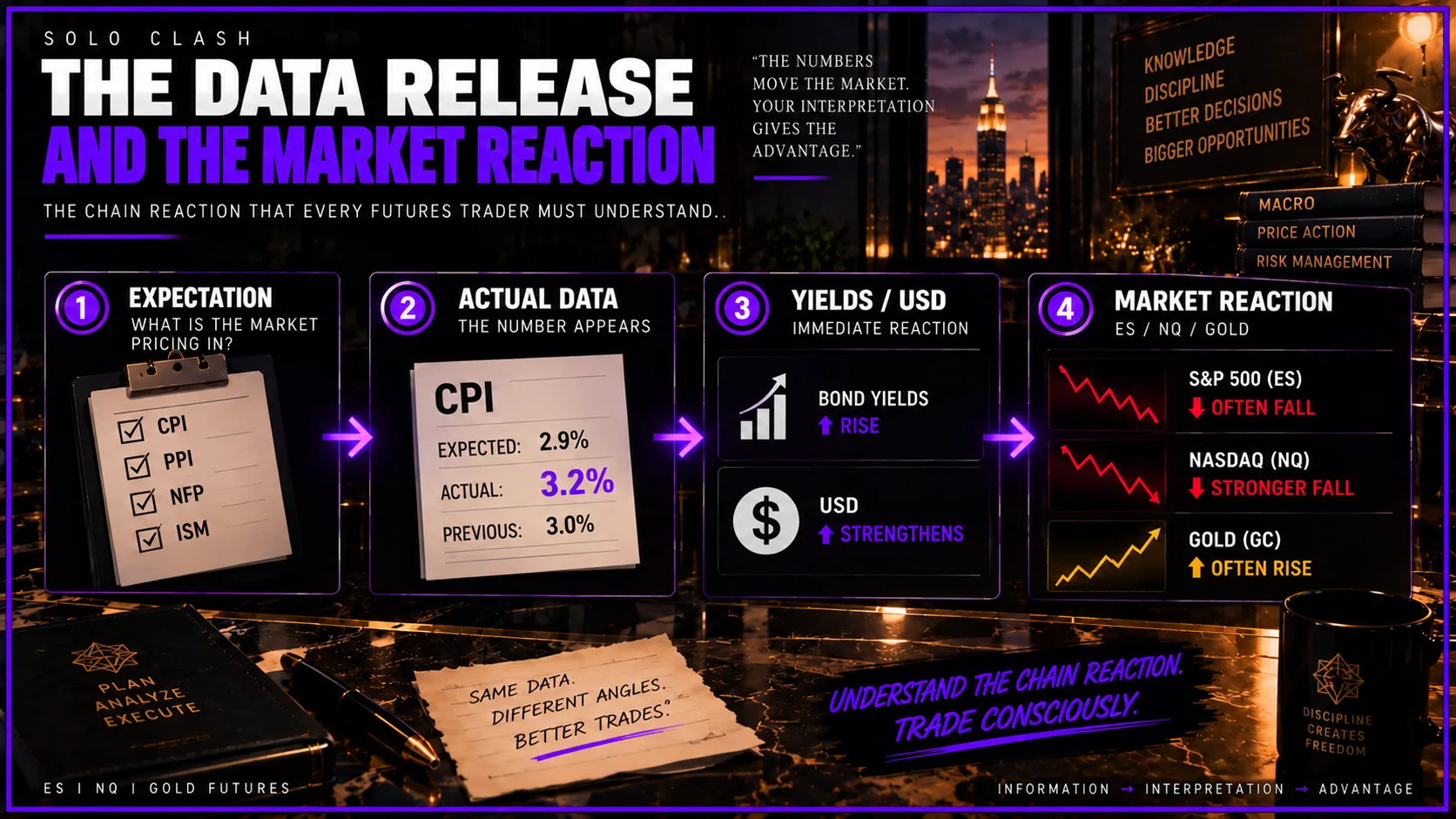
A higher or lower than expected data does not guarantee a given direction on its own. The market's reaction also depends on what it priced in beforehand, which components caused the surprise, and how interest rate expectations change.
The important question is therefore not just: "what was the CPI?" But also: "what did the market believe before, and what does it believe now?"
5. Middle East: the wildcard factor that is not tied to a single 8:30 time slot
One of the week's most important risks is precisely the one for which there is no pre-schedulable release time.
The renewed escalation of the U.S.–Iran conflict in early September already showed how quickly geopolitics can connect to futures markets. According to Reuters reports, alongside new military clashes, oil rose, bond yields moved higher, inflation fears strengthened, while the US stock market came under pressure.
As a trader, this is the chain you should understand:
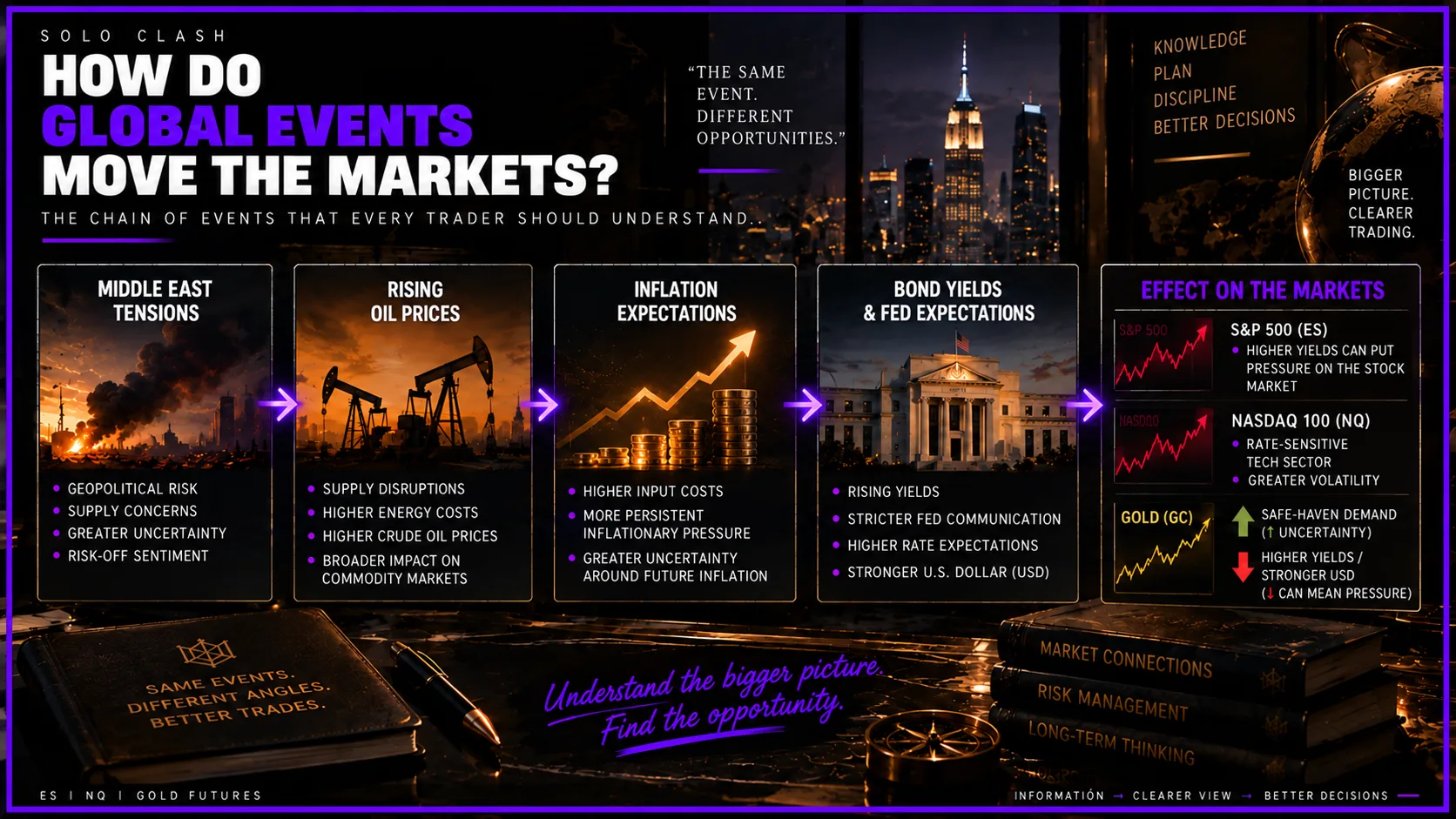
The rise in oil prices can increase concerns about inflation. If this is accompanied by higher interest rate expectations and Treasury yields, it can hit higher valuation tech/growth stocks particularly hard — therefore, as an NQ trader, geopolitical news can be relevant even if you don't trade oil.
For Gold, however, the picture is more complex. Geopolitical uncertainty can create safe-haven demand, while higher US yields and a stronger dollar can exert pressure on gold in the opposite direction. In early September, the market already showed this duality: gold bounced back when the dollar and yields pulled back, while geopolitical uncertainty remained.
Therefore, as a Gold futures trader, do not stop at "war news = gold price up". Also look at what the dollar and the real rate environment are doing in the meantime.
What to watch?
Information related to the U.S.–Iran conflict and the Strait of Hormuz.
The reaction of Brent and WTI.
The 10Y Treasury yield.
The dollar's movement.
In the case of ES/NQ, the durability of the risk-off reaction; for Gold, the balance of power between safe-haven demand and the yield/USD effect.
Not every news is equally important to you
One reason for information overload is that the trader tries to treat every piece of news with equal weight. Instead, start from the instrument.
Topic | ES | NQ | Gold |
|---|---|---|---|
CPI / PPI | High | Very high | Very high |
Treasury yields | High | Very high | Very high |
Middle East / oil | High | High | Very high, but two-way impact |
Labor Day / liquidity | High | High | High |
This does not mean that every high-priority event will cause a large movement. Priority means: it is worth knowing about before you open a position.
What if you trade alongside work or school?
This is where filtering becomes truly useful. You don't have to look at Reuters headlines, the economic calendar, and charts all day to be better prepared.
The goal is not to see every piece of news. The goal is to know before your own trading session: is there an event that can change the usual market environment?
For example, if you only trade 1-2 hours a day, it can already be a significant difference to know in advance that CPI is coming on Friday at 8:30 ET, or that during the week, oil and the Treasury yield suddenly jumped due to geopolitical news.
This way you are not trying to figure out what happened in the middle of the movement.
The Trading Week Ahead checklist
Before you start next week, answer these 7 questions:
Which 2-3 scheduled events are the most important for the futures contract I trade?
Exactly when is this data released?
What is the market currently expecting?
What are Treasury yields and the dollar doing?
Do I have an open position before a major release, and is this in line with my plan?
What is the situation where I rather wait instead of chasing the first movement?
If you know the answers to these, you are no longer trying to follow an endless news feed. You have a map of what matters to you.
Where to follow relevant market information?
One of the biggest obstacles to preparation is not the lack of information, but that it is scattered in too many places. The goal of Solo Clash HQ is to make relevant market information easier for traders to follow when the given feature and information are available.
For scheduled data, it is still worth checking the primary official release source, and for trading hours of futures contracts, using the CME's current product-specific information.
Frequently Asked Questions (FAQ)
What is next week's most important event from the perspective of ES, NQ and Gold futures?
Among the events on the calendar, the US CPI on September 11 could be of paramount importance, especially because it arrives a few days before the September 15-16 FOMC meeting. A day earlier, the PPI can give a new inflation signal.
Why are Treasury yields important for NQ?
Higher yields can increase financing costs and reduce the present value of more distant future cash flows. This can be especially relevant for higher valuation growth/tech stocks, which represent a large weight in the Nasdaq-100.
Why might the Middle East affect ES/NQ if I don't trade oil?
Because geopolitical escalation can move energy prices. Higher oil can influence inflation expectations and interest rate expectations as well, which can also reach index futures markets through Treasury yields and financial conditions.
Is geopolitical tension always positive for gold?
No. Safe-haven demand can support gold, but higher US yields or a stronger dollar can offset this. Therefore, alongside the headline, it is also worth watching the yield and USD reaction.
Is it worth trading directly during a CPI or PPI release?
This depends on your strategy, risk management, and the rules of the given account. Around major macro data, fast price movement and changed liquidity can develop. The important thing is to make the decision in advance, not during the first impulse after the release.
Summary
The week of September 7-11 as a futures trader will not become more manageable by you reading every piece of news.
It will become more manageable by you knowing in advance which few events can change the environment.
On Monday, pay attention to different market operations due to Labor Day. Thursday brings PPI. Friday CPI. Meanwhile, Treasury yields and Fed expectations can be important in themselves for ES and NQ.
Alongside all this, there is the variable that cannot be written into the calendar: the Middle East. The reaction of oil, inflation expectations, yields, indices, and Gold is now an interconnected story.
You don't have to know in advance which way the market will go. But you can know in advance when it is worth paying special attention.
→ Subscribe to the Solo Clash newsletter, and follow the market events relevant to traders with us.
Sources
U.S. Bureau of Labor Statistics — CPI release schedule: August 2026 CPI, Sep. 11, 2026, 8:30 ET.
U.S. Bureau of Labor Statistics — PPI release schedule: August 2026 PPI, Sep. 10, 2026, 8:30 ET.
Federal Reserve — 2026 FOMC calendar: Sep. 15–16 meeting.
CME Group — Labor Day 2026 holiday / settlement schedule.
Reuters, Aug. 31–Sep. 3, 2026 — U.S.–Iran escalation, oil, Treasury yields, inflation concerns, U.S. equities and gold.
Reuters, Sep. 2, 2026 — rising Treasury yields and implications for U.S. equities.
Note: the market environment and geopolitical situation can change rapidly. Before publishing, update headlines, market pricing, and product-specific CME trading hours. This article is for educational purposes and is not a trading recommendation.